

You open a chat and see two lonely letters: “SU meaning .” Is your friend teasing you, saying goodbye, or pointing you to a link?
It happens a lot. This tiny abbreviation changes meaning with the platform, the tone, and the person sending it. This guide covers every common meaning, with examples, replies, and tips so you never misread it again.
Quick Answer
In texting, SU most commonly means “shut up”, used playfully to react to a joke or surprising news. It can also mean “see you” as a casual goodbye. On Snapchat and Instagram it often stands for “swipe up” or “scroll up.” Tone and context decide which one applies.
What Does SU Mean in Text?
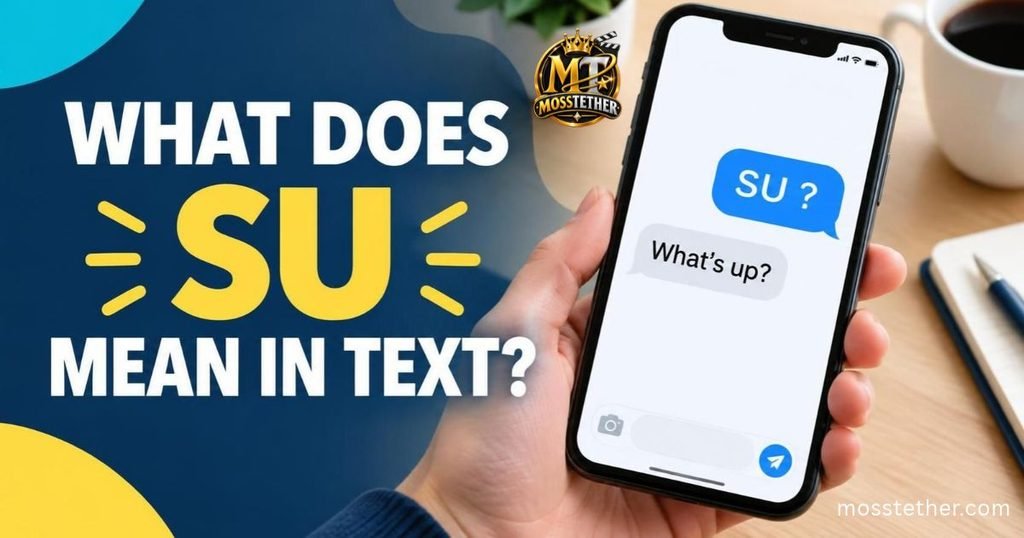
SU is a two-letter shorthand used in chats, DMs, and comment sections. People type it because it is fast, casual, and easy to send between other messages.
Most of the time it is friendly. A teasing “SU 😂” usually means “no way!” rather than “be quiet.” Always read the message around it before reacting.
Su Meaning in Spanish
In Spanish, “su” is a regular word meaning “his,” “her,” “its,” “your” (formal), or “their.” For example, “su casa” means “his/her/their house.”
This has nothing to do with the slang. If you are chatting with Spanish speakers, expect to see “su” as a full word. The plural form is “sus.”
A third meaning exists in tech. In Linux and Unix, “su” is a command that stands for “switch user.” Again, it is unrelated to texting.
SU Meaning in Chat Conversations
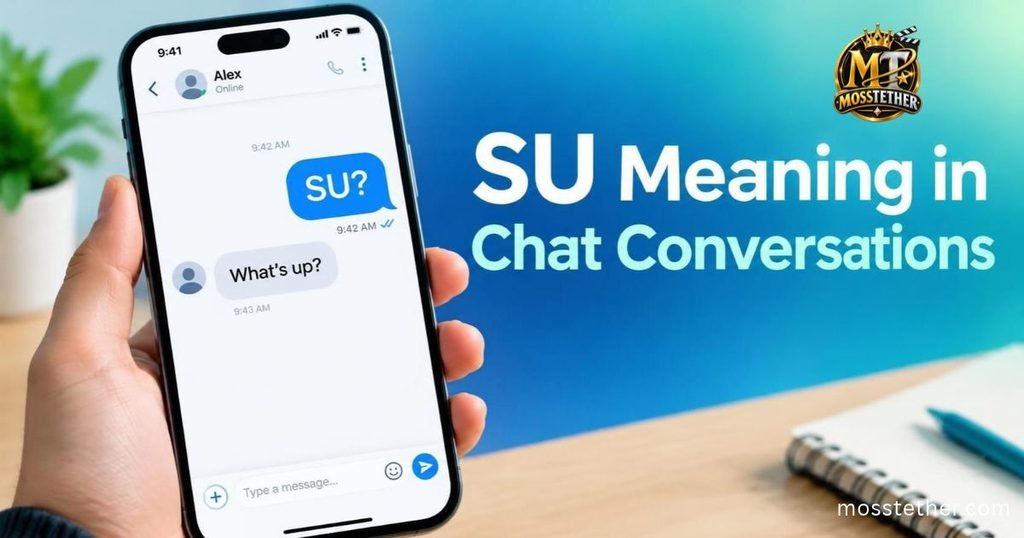
In regular chats, only two meanings really matter. Both are short, informal, and easy to confuse if you ignore the mood of the conversation.
The quick table below shows how to tell them apart.
| Meaning | Typical mood | Example |
| Shut up | Playful, surprised, teasing | “You got the job?! SU!” |
| See you | Calm, wrapping up, making plans | “Dinner at 7? SU then.” |
SU as “Shut Up”
This is the most common reading. Friends use it to show disbelief, excitement, or mock annoyance, not real anger.
Typical triggers include a good joke, juicy gossip, or a compliment someone is shy about. An emoji such as 😂, 🙄, or 😳 usually confirms the friendly tone.
SU as “See You”
Here the abbreviation works as a goodbye, like “bye” or “TTYL.” It tends to appear when a conversation is winding down.
Look for plans, times, or places nearby. If the chat mentions meeting up, “see you” is almost certainly the answer.
SU Meaning on Social Media Platforms
Each app has its own habits. A phrase that reads as a joke on one platform can read as a call to action on another.
Here is a quick comparison before we go app by app.
| Platform | Most likely meaning | Common tone |
| Swipe up / scroll up | Promotional or casual | |
| Snapchat | Swipe up | Instructional, playful |
| Shut up / see you | Friendly, conversational | |
| TikTok | Shut up / scroll up | Reactive, humorous |
SU on Instagram
On Instagram, creators often use it to point followers toward a link or a post. “S/U for the link” is a typical example.
In DMs, it flips back to the “shut up” reaction. If someone replies to your story with “SU,” they are probably surprised, not upset.
SU on Snapchat
Snapchat is where “swipe up” became popular, because stories once used a swipe gesture to open links. You will still see it in captions and promos.
In private snaps, friends also use it as a quick, teasing reaction. Check the photo or caption for hints.
SU on WhatsApp
WhatsApp chats are personal, so the meaning leans toward “shut up” in jokes or “see you” when plans are set. Family and friend groups use both daily.
Because messages stay in one long thread, scrolling up a few lines usually reveals the intent.
SU on TikTok
In TikTok comments, it often works as a reaction to a funny or shocking video. Think “stop, that’s too good.”
Creators may also use it to tell viewers to scroll up to a pinned comment or link.
Why People Use SU in Texting
People type short slang because it saves time. A two-letter reply keeps a fast conversation moving without breaking the flow.
There are other reasons too:
- Speed: fewer taps on a phone keyboard
- Tone: it sounds relaxed and casual
- Bonding: shared slang makes friends feel closer
- Humor: playful teasing is easier in short bursts
Understanding SU Based on Context
Context is everything. The same two letters can be a joke, a goodbye, or an instruction.
Ask yourself these questions:
- Who sent it, and how close are you?
- Is the chat ending or just starting?
- Is there an emoji or punctuation that shows mood?
- Which app are you using?
If you still cannot tell, simply ask. A quick “wait, do you mean shut up or see you?” is perfectly normal.
Best Time to Use SU in Texting
Use it with close friends, in casual chats, and when the mood is light. It works best as a reaction to humor or surprising news.
It also fits at the end of a conversation when you are making plans. Pair it with a time or place so the meaning is obvious.
SU vs Other Similar Slang
Texting is full of short forms with overlapping vibes. Some are gentler, others much sharper.
| Slang | Meaning | Strength |
| SU | Shut up / see you | Mild, context-based |
| STFU | Shut the f*** up | Strong, often rude |
| SMH | Shaking my head | Mild disapproval |
| TTYL | Talk to you later | Neutral goodbye |
| BRB | Be right back | Neutral |
| OMG | Oh my God | Surprise |
Psychological Effect of Using SU
Short, playful phrases create a sense of closeness. Teasing a friend with it signals “we are comfortable enough to joke.”
The risk is misreading. Without voice or facial expression, a teasing message can feel harsh to some readers. That is why emojis matter so much.
Cultural Importance of SU
Slang like this shows how young communities build their own language. Abbreviations act like inside jokes that signal belonging.
They also spread across countries through apps, memes, and games. A phrase born in one chat group can become common worldwide within months.
How SU Helps Increase Engagement
For creators, short phrases invite quick replies. A playful reaction in the comments can spark jokes, debates, and follow-ups.
In the “swipe up” sense, it directs attention to a link or offer. Clear calls to action tend to get more clicks than vague ones.
Different Ways to Reply to SU in Text
Your reply depends on which meaning you think was intended. Here are easy options.
If it means “shut up” (playful):
- “Haha, I’m serious!”
- “I know, right? 😂”
- “Ok, ok, but it’s true.”
If it means “see you”:
- “See you soon!”
- “Bye! Text me when you’re there.”
- “Sounds good, later!”
If you are unsure:
- “Wait, what do you mean?”
- “Is that a shut up or a see you? 😄”
Common Variations of SU
The abbreviation shows up in a few forms. Punctuation and spacing change the feel a little.
- S/U: the slashed version, often used for “swipe up”
- SU!: an excited, surprised reaction
- SUUU: stretched out for dramatic effect
- SU 😂 / SU 🙄: emoji sets the exact mood
- STFU: the harsher cousin
SU in Group Chats vs Private Chats
Group chats are noisy, so short replies get used more. Here the term often reacts to a meme or a joke posted by someone else.
Private chats feel more personal. The same message may carry more teasing or more warmth, depending on your bond.
| Setting | Typical use | Risk of misunderstanding |
| Group chat | Quick reactions, goodbyes | Medium |
| Private chat | Teasing, flirting, plans | Lower with close friends |
Is SU Still Relevant in 2026?
Yes, though it is not a headline trend. It remains a familiar bit of everyday chat shorthand, especially among younger users and gamers.
Newer slang comes and goes quickly, but classics like this tend to stick around because they are simple and useful.
How SU Reflects Digital Communication Trends
Modern messaging favors speed, emotion, and brevity. Short words, emojis, and reactions often replace long sentences.
This abbreviation fits right in. It is quick to type, flexible in meaning, and tied to humor.
The Evolution of SU in Digital Communication
Early chat rooms and SMS had tight character limits, so people shortened everything. Abbreviations like this one grew from that habit.
When social apps added swipe gestures, a new meaning appeared: “swipe up.” Slang evolves with the technology around it.
Common Mistakes People Make When Using SU
Most problems come from assuming everyone reads it the same way. A few simple habits prevent awkward moments.
- Using it with someone you barely know
- Sending it without an emoji in a serious chat
- Using it in work emails or formal messages
- Mixing it up with the Spanish word “su”
- Forgetting that older relatives may not understand it
Difference Between SU and STFU in Texting
Both relate to silence, but the energy is different. One is usually light; the other is blunt.
| Feature | SU | STFU |
| Full form | Shut up (or see you) | Shut the f*** up |
| Tone | Playful, mild | Strong, sometimes rude |
| Common use | Joking, goodbye | Frustration, intense reaction |
| Safe with friends? | Usually | Depends on the friend |
| Safe at work? | No | Definitely not |
How SU Is Used in Online Communities
On Discord servers, forums, and game chats, short slang keeps conversation fast. Players may use it to tease a teammate or end a session.
Each community has its own rules, so watch how regulars talk before joining in.
How SU Keeps Conversations Engaging
Light teasing adds personality to a chat. It breaks up plain, serious messages and makes the exchange feel human.
A quick reaction also shows you are paying attention, which keeps the other person talking.
Future of SU in Digital Communication
Messaging keeps moving toward voice notes, stickers, and short video replies. Even so, typed shorthand is unlikely to vanish.
This abbreviation may gain or lose popularity, but its simple structure makes it easy to carry forward.
Importance of Understanding SU
Knowing common slang helps you avoid awkward misunderstandings. It also keeps you connected with friends, family, and followers.
For parents and teachers, it is a useful way to follow how young people actually talk online.
Role of SU in Online Conversations
It acts as a social shortcut. In two letters, it can show humor, surprise, farewell, or direction.
That flexibility is exactly why context matters so much.
When to Use SU
Use it when the setting is relaxed and the other person knows you well.
- Reacting to a funny story
- Ending a casual chat before meeting up
- Directing followers to scroll or swipe on a post
- Joking in a group chat
When NOT to Use SU
Skip it when tone could be misread or the situation is serious.
- Professional emails or work chats
- Messages to teachers, managers, or clients
- Arguments or emotional conversations
- Chats with people who do not know your humor
Similar Slang Terms to SU
If you like short chat language, these are worth knowing:
- TTYL: talk to you later
- BRB: be right back
- SMH: shaking my head
- IDK: I don’t know
- IKR: I know, right?
- OMW: on my way
- SUP: what’s up
Why SU Is Trending
It keeps showing up because it is quick, familiar, and multi-purpose. Social media makes small phrases spread fast.
Search interest also grows whenever someone receives the message and is unsure what it means.
SU Meaning Based on Intent
Intent changes everything. Who sends it, and why, tells you how to read it.
From a Friend
A friend usually means “no way!” or “see you later.” Expect jokes, emojis, and a warm tone.
From Influencer
An influencer usually means “swipe up” or “scroll up” to find a link, product, or pinned post. The tone is promotional, not rude.
FAQs
What does SU stand for?
It most commonly stands for “shut up,” and sometimes “see you” or “swipe up,” depending on the chat.
What does “su” mean?
In slang, it is shorthand for “shut up” or “see you.” In Spanish, “su” simply means “his,” “her,” “your,” or “their.”
What is the full form of SU?
The usual full forms are “Shut Up” and “See You.” On social apps it can also be “Swipe Up.”
What does I SU?
“I SU” is not standard slang and is usually a typo or a cut-off message, such as “I see you.” Check the surrounding text or ask the sender.
Conclusion
This little abbreviation can be a joke, a goodbye, or a link prompt SU meaning. The sentence around it, the app you are on, and your relationship with the sender always point to the right answer.
When in doubt, use an emoji to set the tone, or just ask. Keep it for casual chats, avoid it in formal ones, and you will use it with confidence.

Ethan Blake is the creative voice behind Mosstether, a fun and engaging space dedicated to clever puns, celebrity stories, pop culture, and entertaining content. With a passion for words and a love for discovering what makes people smile, Ethan brings a fresh and lighthearted perspective to every article.


